
The Gap Is Usually Smaller Than It Looks: What One-to-One Tutoring Actually Fixes
A disappointing grade arrives, and the first thing most families feel is that something large has gone wrong. A student who was fine last year is suddenly “bad at math.” A chemistry class that seemed manageable in September now feels like a wall. The instinct is to treat the whole subject as the problem.
In our experience, it almost never is. Most of the time the real gap is narrow and specific: one idea that never quite landed, one habit that worked last year and stopped working this year, one kind of question the student freezes on. The grade looks like a cliff. The cause is usually a crack.
That is the case for one-to-one tutoring, and it is why our online tutoring is built around a single student and a single tutor rather than a class.
A low grade is a symptom, not a diagnosis
A test score tells you that something went wrong. It does not tell you what. Two students can get the same score on the same algebra test for completely different reasons: one cannot set up the equation from a word problem, the other sets it up perfectly and then loses a negative sign halfway through. More practice of the same kind fixes neither of them, because neither of them has the same problem.
This is the part a busy classroom struggles with. A teacher with a full room has to keep the whole group moving, and the student who is quietly stuck on the first step of every problem can look, from the front of the room, a lot like the student who simply did not study.
A good tutor’s first job is diagnosis. Watch the student work. Ask them to explain a step out loud. Notice where the confidence drops. It is unglamorous, and it is the most valuable hour in the whole process, because once you know what is actually broken the fix is often much smaller than anyone expected.
Why one-to-one works differently
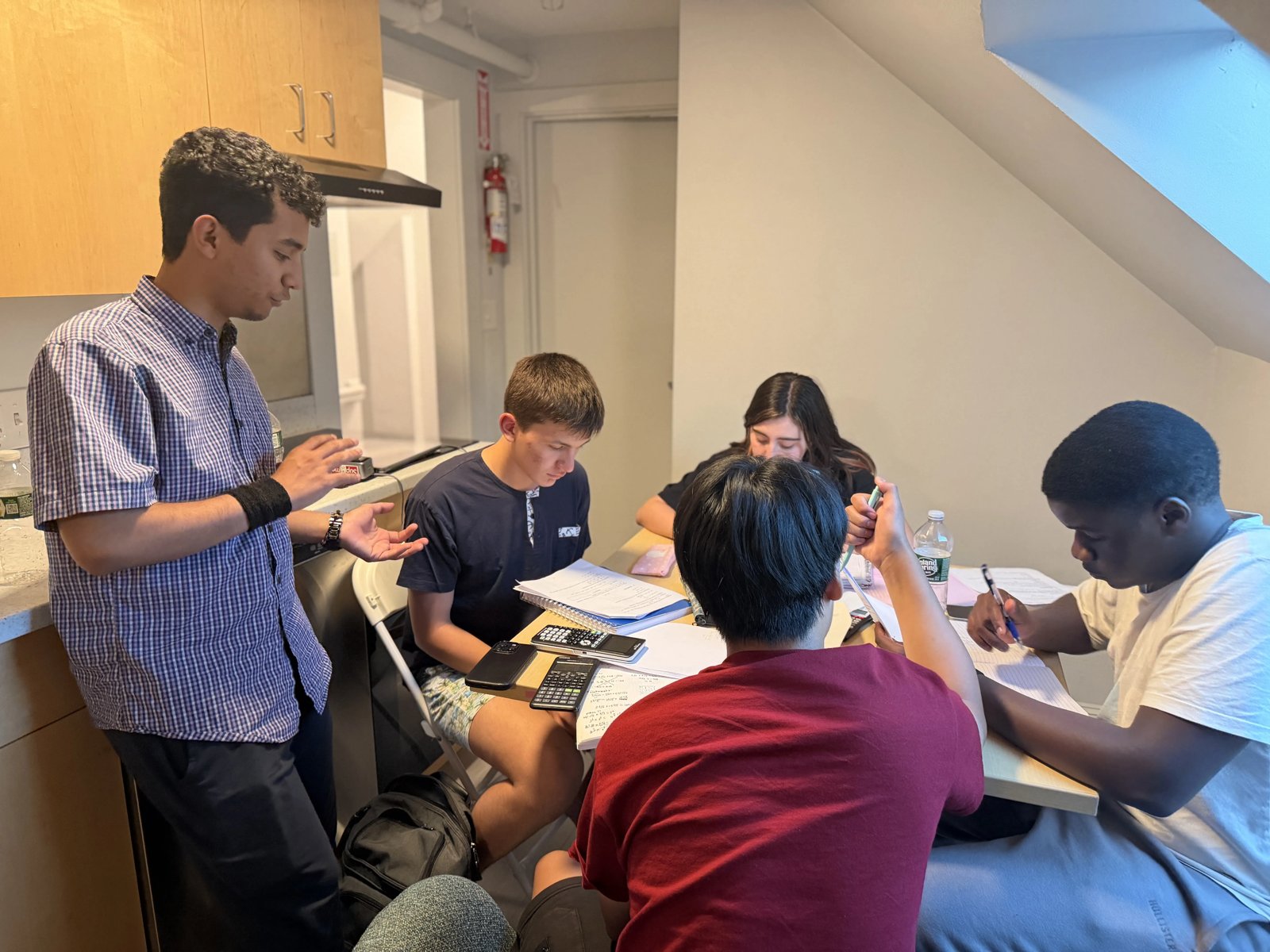
In a class of twenty-five, a student who does not understand something has to decide whether it is worth raising a hand in front of everyone. Many decide it is not. In a session with one tutor, that calculation disappears. There is nobody to perform for, and the question that felt too basic to ask in class is simply the next thing to talk about.
The pace changes too. A one-to-one session can stay on a single idea for twenty minutes if that is what it takes, and then move through three topics the student already understands in five. Nothing is wasted on material the student has already mastered, and nothing important gets skipped because the class had to move on.
That is what we mean when we say every session is personalized. It is not a slogan about attention. It is a practical statement that the plan for the hour is built around one student’s actual gaps and goals, not a syllabus written for an average student who does not exist.
Our sessions are one hour long, entirely online, and scheduled flexibly, so they fit around school, sports and everything else a student is carrying. A student can join from anywhere with a laptop and a quiet corner.
What we tutor
The subjects are broader than our name suggests.
Math runs from elementary school all the way through AP Calculus, plus competition math for students who want problems harder than anything their school will give them. The emphasis is on conceptual understanding and problem-solving, not memorizing procedures for the next test.
Science covers biology, chemistry and physics, with attention to real-world applications and to how experiments are actually designed.
AI and coding includes Python, AI fundamentals, machine learning and algorithms, for students who want to build things rather than just use them.
SAT preparation is strategic: practice tests, and then targeted work on the specific question types where a student is losing points.
College counseling helps with essays, applications and academic planning, and it can be combined with subject tutoring so that academics, mentorship and college readiness are handled together rather than by three different people who never talk to each other.
Who does the teaching
Our tutors include Ph.D.s and researchers, Ivy League graduates and undergraduate students, and experienced teachers, engineers and professionals with proven track records. You can read about them on our faculty page.
That range matters more than it might seem. A student struggling with the basics of fractions needs a different kind of tutor from a student chasing a competition medal or writing a first machine-learning project. The free introductory session, below, is where that fit starts to become clear.
What the free introductory session is for

Every new student can start with a free 45-minute introductory session. We would like families to think of it less as a sales call and more as that first diagnostic hour described above.
It is a chance for the tutor to see how the student thinks, where they are confident and where they hesitate. It is a chance for the student to find out whether this way of working suits them, which matters a great deal, because a student who does not want to be in the session will not learn much in it. And it is a chance for parents to hear, plainly, what the tutor thinks is going on and what a reasonable plan would look like.
Sometimes the honest conclusion is that a student needs a few focused sessions to close a specific gap, and then needs nothing more. Sometimes it is that they are ready for more than their class is giving them, and the conversation turns to competition math, coding, or our professor-led research program. Either answer is useful. Both are better than another month of guessing.
How to get started
Tutoring runs year-round, so there is no enrollment window to wait for. Starting earlier in a semester simply leaves more time to fix things before the grades that count are set.
The first step is our tutoring application form. It asks about the student’s grade, school, subjects of interest and goals, so that the first conversation can start from something real. We respond within 24 to 48 hours to arrange the free introductory session.
If a grade this term has turned into a worry at home, it is worth finding out what is really behind it. More often than not, the gap is smaller than it looks. Request your free introductory session and let’s find out together.