
Understanding First: Three Ideas Behind How We Teach at CyberMath
Every education company says it has great teachers and a proven method. Those words are easy to write and hard to check. So instead of adjectives, here is a plain description of how we actually teach, and why.
CyberMath Academy has been teaching for nine years. We are WASC accredited, and we run online programs and in-person summer camps for K–12 students in math, AI and coding, machine learning, SAT prep and Olympiad math. The programs look different from the outside: a one-hour online lesson, an eight-week research course, a summer on a university campus. Underneath, they rest on the same three ideas.
1. Understanding first, speed later
A lot of math is taught as a list of moves. Memorize the rule, practice it until it is fast, move on to the next rule. It works, until the student meets a problem that does not look exactly like the practice set. Then there is nothing underneath to fall back on.
We teach the other way round. First, why does this work? Then, how do you use it? Only after that, how fast can you do it?
Take a question many students simply memorize: why is a negative times a negative a positive? Write out three times minus two, two times minus two, one times minus two, zero times minus two. The answers go minus six, minus four, minus two, zero: up by two each time. Continue the pattern one more step and minus one times minus two has to be plus two. Nothing was memorized. The rule falls out of the pattern, and a student who has seen that will not forget it.
That is what our tutoring page means by “conceptual understanding plus problem solving.” In our summer camps, it shows up as an emphasis on proof-writing and formal mathematical reasoning, the part of mathematics school rarely has time for. A student who can explain why something is true can usually work out what to do with a problem they have never seen before.
2. Every student at the edge of what they can do
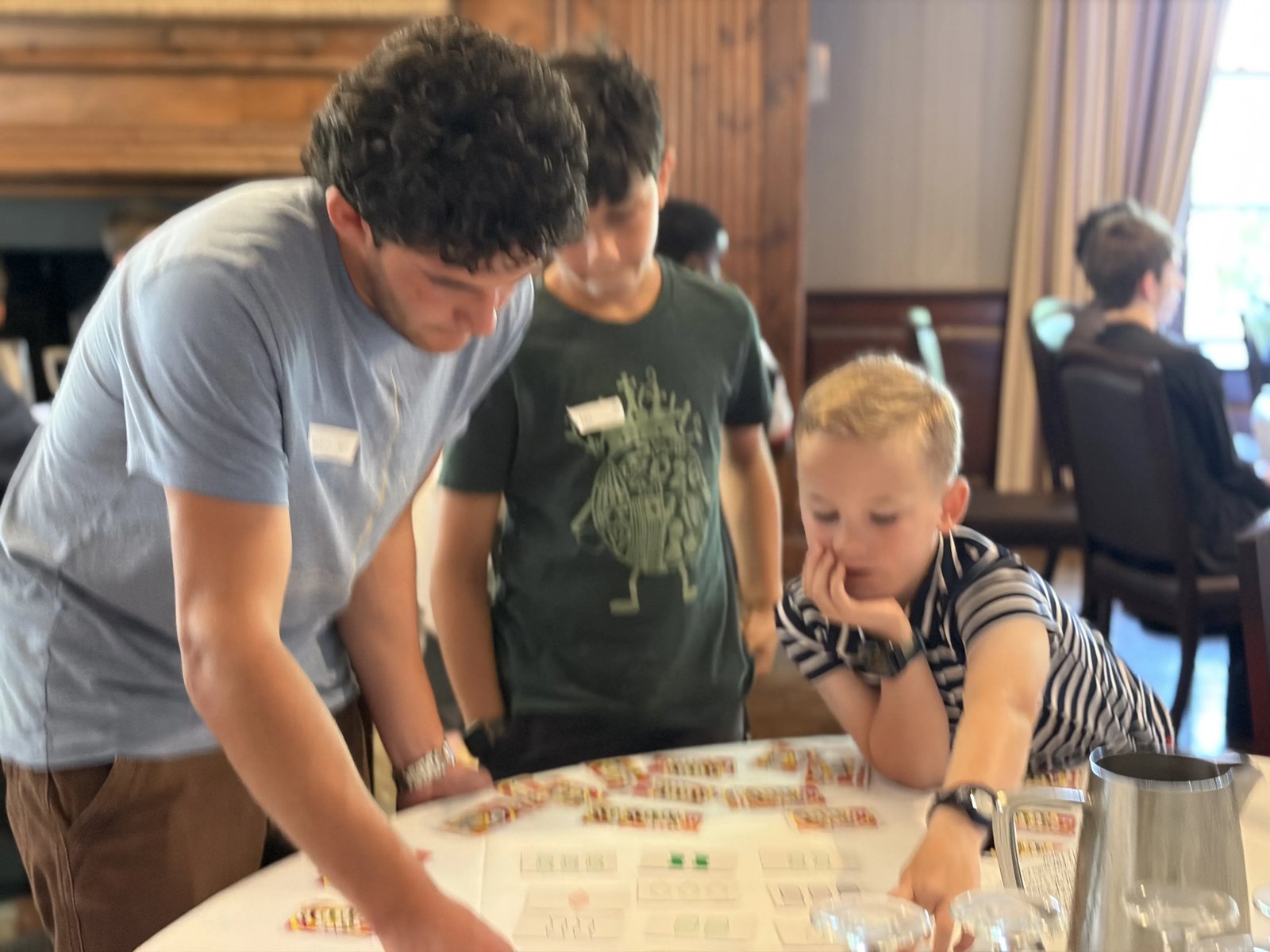
Work that is too easy teaches nothing. Work that is far too hard teaches mostly that you are not good at this. The useful zone is the edge: hard enough that the student has to think, close enough that they can get there.
Finding that edge is a large part of our job, and each program does it differently.
In one-to-one online tutoring, it is the whole point of the format. Each session is an hour with one tutor and one student, personalized to that student’s goals. There is no class to keep pace with, so the lesson can stop exactly where the student is stuck. Your first conversation with us is a free 45-minute introductory session, which is where we start working out where that edge is.
In our summer math camps, every student takes a placement exam, and courses come in Foundations and Mastery options so a strong student and a very strong student are not forced into the same room. If the placement turns out to be wrong, students can switch within the first three to four days.
In the research program, the challenge is a real question rather than a textbook exercise, with a professor checking in along the way so that it stays hard without becoming hopeless.
3. Taught by people who do the subject
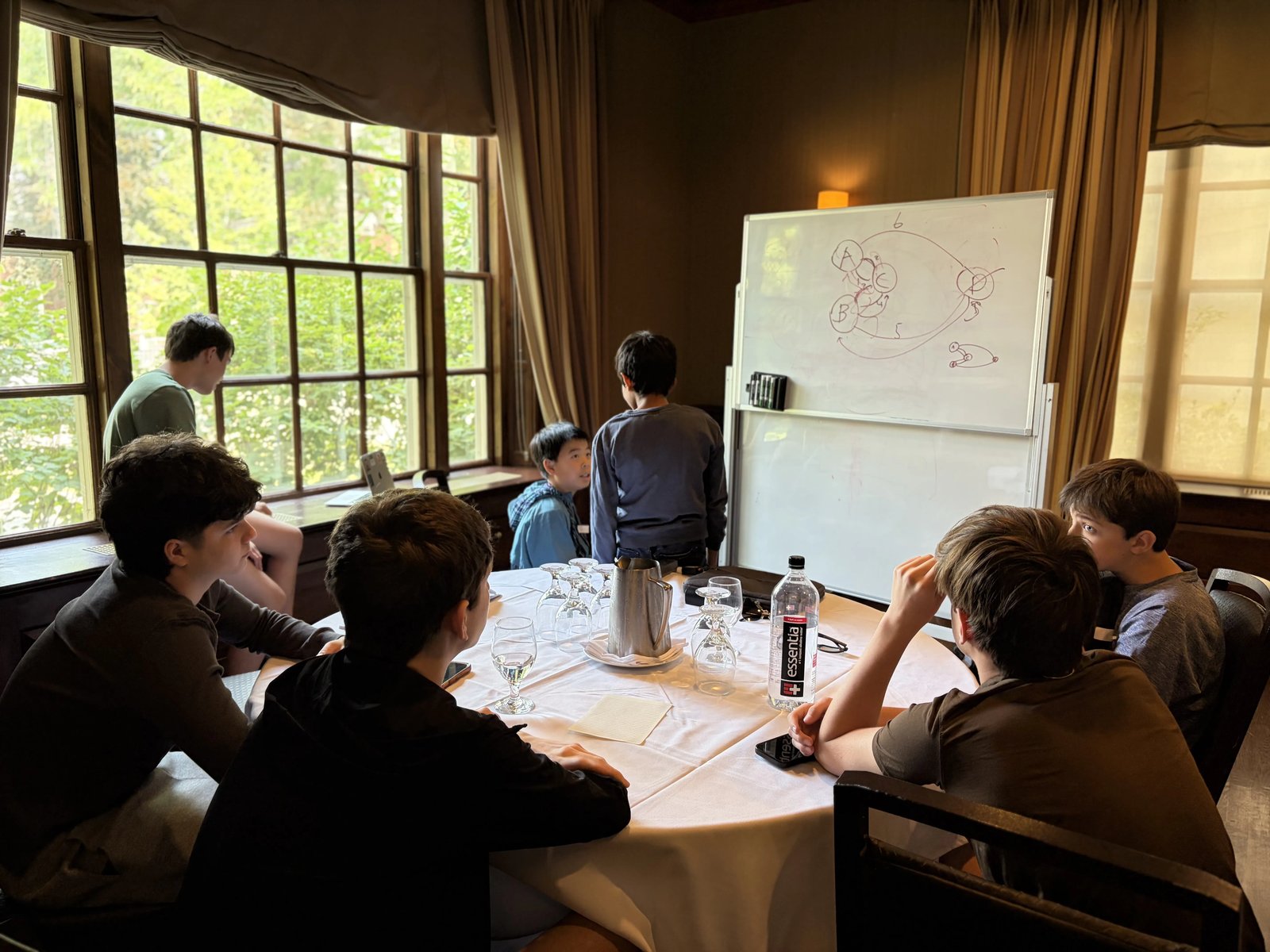
We think the best person to teach mathematics is someone who uses it, and can say why it matters, not just how to do the next step.
Our tutors range from Ph.D.s to Ivy League graduates and undergraduates, alongside teachers, engineers and other professionals with a track record of helping students. Our summer camps are taught by IMO medalists and AI researchers. Our online research program is led by university professors: the first program, in biochemistry, is led by Prof. Ahmet Yildiz of UC Berkeley.
When the person teaching has done the work themselves, students hear the real version: where ideas came from, which parts are hard for everyone, and what it feels like to be stuck and then not stuck. That is difficult to get from a script.
What this looks like in each program
Online tutoring. One-to-one, one-hour sessions, fully online with flexible scheduling. Subjects include math from elementary school through AP Calculus and competition math, biology, chemistry and physics, Python, AI and machine learning, SAT preparation, and college counseling.
Online research program. Eight weeks, 100% online, with live sessions and professor-guided feedback and check-ins. Students work toward a capstone project and presentation in the final week. Everyone who completes the program receives a certificate, and recommendation letters are available for top performers.
Summer math camps. For ages nine to sixteen, with day and residential options. Advanced Middle School Math is recommended for grades four to eight and Advanced High School Math for grades nine to twelve, plus an AI and Machine Learning track that needs no prior experience. Students receive letter grades with instructor comments and a certificate of completion, so the work is assessed honestly, not just attended.
Different formats, same three ideas: understand it first, work at the edge, learn from people who do it.
How to see whether it fits your student
The simplest test is a conversation. Tell us where your student is, what they enjoy, what is getting in the way, and we will tell you honestly which program, if any, makes sense. Sometimes the answer is a few tutoring sessions to close one specific gap. Sometimes it is a research course or a summer camp. Sometimes it is nothing at all, for now.
If you are a student reading this, the same goes for you. You do not need to be “a math person” to start. You need to be curious about why things work.
Start with CyberMath: explore the programs, or book a free 45-minute introductory session and see how we teach for yourself.